
The decision between a mobile crushing plant and a fixed installation is not about which machine is "better." It is about which configuration matches the physical reality of your project: how long you will be there, how often you need to move, and whether the material comes to the crusher or the crusher goes to the material.
This guide breaks down the three decisions that determine the answer—project duration and relocation frequency, chassis type, and crusher selection—using the same criteria we apply when evaluating contract crushing and quarry operations. The goal is not to sell you on mobility. It is to help you determine whether mobility is worth what it costs.
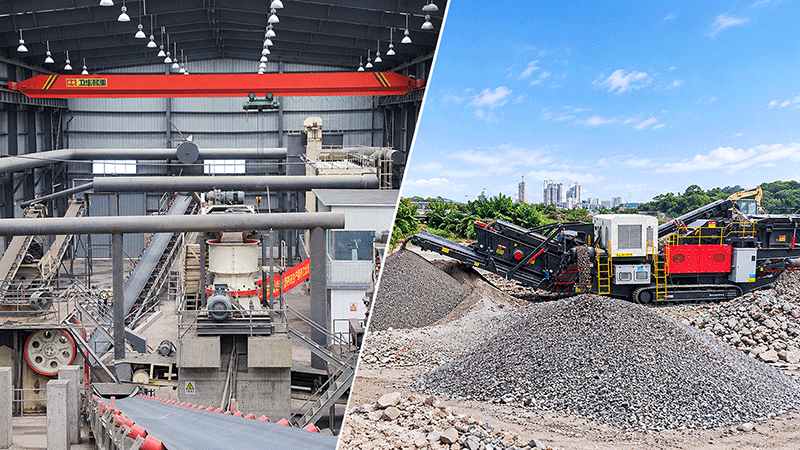
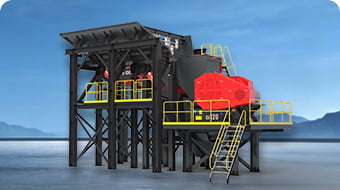
Fixed plant wins on cost per ton; mobile wins on speed to production and zero foundations
1. The Real Decision Variables: Duration, Relocation, and Terrain
Most buyers start with the wrong question: "What is the price of a mobile crusher?" The more useful question is: "How many times will this machine move in its economic life?"
The five-year threshold. If your project has a defined life of five years or less—a road contract, a construction waste recycling job, or a cluster of small deposits—a mobile plant's economics are difficult to beat. The equipment premium over a fixed plant is offset by near-zero civil works and the ability to produce within days rather than months. Industry data puts time-to-first-ton for mobile units at 3–14 days after arrival, versus 14–24 weeks for a fixed plant with concrete foundations and structural steel.
The relocation frequency test. Tracked and wheeled plants serve different rhythms. A producer working a single large pit who needs to shift position by a few hundred yards repeatedly over years is a natural fit for tracks. Wheeled plants, by contrast, are the practical choice for operations that move from pit to pit three or four times per year or more—the typical cadence of contract crushing. If your answer to "how often will you move it?" is "once, when we buy it," you are paying for mobility you will never use.
The haulage calculation. The strongest financial argument for mobile crushing is not the machine itself. It is the trucking cost you eliminate by crushing at the face rather than hauling run-of-mine material to a central plant. For deposits spread across a wide area, or demolition jobs where material is generated in multiple locations, this saving can exceed the equipment premium entirely.
2. Tracked vs. Wheeled: The Chassis Decision Most Buyers Get Wrong
Once you have decided that mobility makes sense, the chassis choice is the next fork in the road. This is where the "wow factor" of remote-controlled tracked equipment can override sound economics.
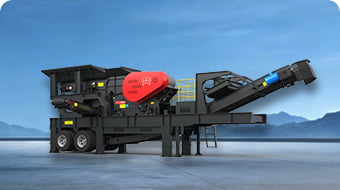
The case for wheeled plants. Wheeled units are typically pulled by a standard tractor unit over the road at highway speeds, with no lowboy trailer required. Many run on shore power rather than an onboard diesel engine, which removes fuel cost and engine maintenance from the operating budget. The layout is generally more open, which matters more than buyers expect: maintenance access on a wheeled plant is simpler, and the long-term wear items—electric motors and tires—are far easier and cheaper to replace than a tracked undercarriage.
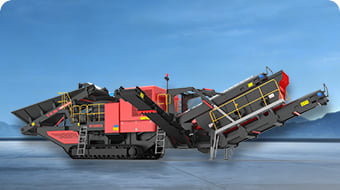
The case for tracked plants. Tracks earn their keep in operations that require genuine in-pit repositioning. A tracked unit is self-contained and can walk itself into position on uneven ground without a tow vehicle. If your working face advances daily and the crusher must follow it across rough terrain, tracks are the correct tool. The trade-off is higher upfront cost, constant diesel consumption, and a maintenance profile that worsens with age. After ten years, a tracked plant may need undercarriage replacement, engine overhaul, and hydraulic repair—expenses that a wheeled plant's electric drive largely avoids.
A practical rule. If the machine will spend more time producing than moving, and the moves are between sites rather than within a single pit, evaluate wheeled first. If the machine must follow a moving face across broken ground every day, tracked is the answer. The "remote control" convenience is real, but it is rarely worth a decade of undercarriage maintenance if your site is flat and your relocations are infrequent.
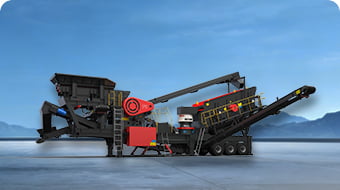
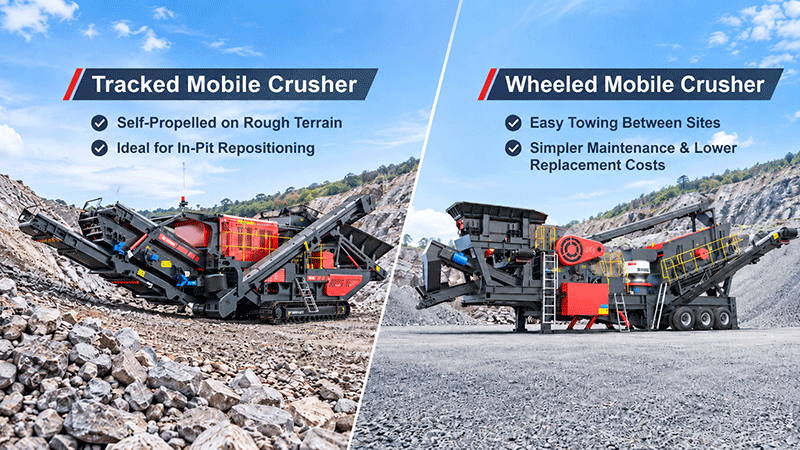 Tracked for in-pit repositioning; wheeled for site-to-site moves and lower maintenance cost
3. Crusher Type Matches the Application, Not the Marketing
The crusher mounted on the chassis should be selected by feed material and product requirement. Selecting an impact crusher because it produces a "better shape" without accounting for wear cost is one of the most common and expensive mistakes in mobile plant specification.
Jaw crushers for primary reduction. A mobile jaw crusher is the standard choice for reducing large run-of-mine rock to a consistent size for secondary processing. It handles hard, abrasive material well and tolerates a wider range of feed sizes than impact or cone units. The product is coarse and not final-spec, but that is not the jaw's job.
Impact crushers for recycling and medium-hard rock. Horizontal shaft impactors are the most versatile mobile crusher type. They produce a cubical product with good gradation and achieve high reduction ratios, which makes them popular in concrete and asphalt recycling where rebar liberation and product shape matter. The critical caveat is wear cost: the same high reduction ratio that makes an impactor productive also consumes blow bars quickly. If your feed is highly abrasive, the wear bill can undermine the operating budget within months.
Cone crushers for hard rock secondary and tertiary work. A mobile cone crusher is the correct choice for producing specification aggregate from hard, abrasive rock in a secondary or tertiary position. Wear life is better than an impactor on abrasive feeds, but the unit typically requires a primary jaw ahead of it due to feed size limitations.
The selection error to avoid. Do not specify an impact crusher for a hard, abrasive quarry feed simply because it offers a higher reduction ratio. The initial productivity looks attractive; the wear parts invoice does not. Match the crusher to the material, not to the throughput number on the specification sheet.
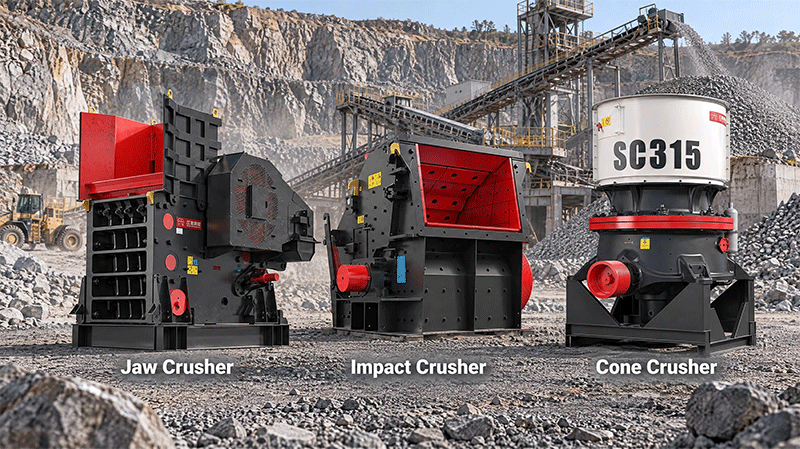
Jaw, impact and cone crushers: matched to feed material and product spec
4. When Mobile Loses: Capacity Ceiling and Cost Per Ton
A credible guide must state the limits of its subject. Mobile crushing is not the right answer for every project, and pretending otherwise damages trust.
The capacity ceiling is real. Mobile plants typically operate in the 30–800 TPH range per unit, with combination lines reaching higher figures. Fixed plants, by contrast, are engineered for 50–3000 TPH with no chassis constraints. If your required throughput sits above roughly 300 TPH and your project life exceeds 20 years, a fixed plant's lower cost per ton over its lifetime will almost certainly outweigh the mobile plant's flexibility.
The equipment premium is significant. Mobile plants carry a 30–70% premium per ton of capacity compared with fixed equipment. That premium buys speed to production, zero foundations, and relocation capability. If you do not need those three things, you are paying for features that generate no return.
The honest calculation. Run the comparison using your actual numbers: equipment cost, foundation and civil works, time-to-first-ton, trucking cost per ton of feed, and expected relocation count. For a five-year project with two relocations and no existing infrastructure, mobile often wins. For a permanent quarry with a 20-year reserve and a fixed primary crushing location, the fixed plant wins on total cost. There is no universal answer—only an answer for your site.
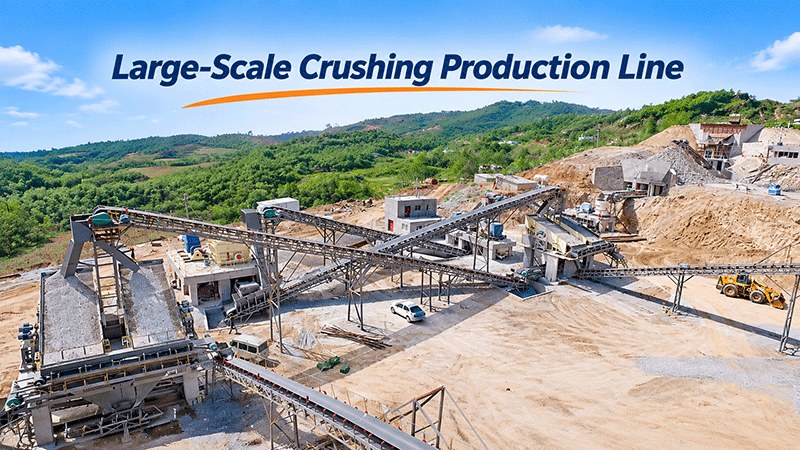
Fixed plant: the choice for high capacity and long-term projects
Frequently Asked Questions
How do I calculate the payback period for a mobile crusher versus a fixed plant?
Build the comparison around three numbers: equipment cost difference, civil works avoided, and haulage cost saved per ton. A mobile plant's higher equipment cost is recovered through zero concrete foundations and the elimination of trucking run-of-mine material to a central plant. If your material is spread across multiple locations or your project life is short, the payback can be measured in months. If your material is in one place for decades, the fixed plant's lower per-ton cost compounds over time.
For construction and demolition waste recycling, should I choose an impact crusher or a jaw crusher?
Impact crushers are generally preferred for C&D waste because they handle the mixed, contaminated feed better, liberate rebar effectively, and produce a cubical product suitable for reuse as aggregate. Jaw crushers can be used for initial size reduction in recycling, but the product shape and gradation are less favorable, and a secondary impactor is often required downstream. The decision should be based on your intended end product specification and the abrasiveness of the concrete you expect to process.
What site preparation does a mobile crushing plant require?
A compacted gravel pad is typically sufficient. No reinforced concrete foundation is required, which is the primary reason mobile plants can begin production within days of arrival rather than months. The pad must be level enough to support the chassis and provide stable footing for the feed material and stockpiles. For tracked units operating in-pit, the ground conditions at the working face—not a prepared pad—determine whether the chassis can access the material.
About the Author
This guide is prepared by the process engineering team, drawing on equipment specification and commissioning experience across aggregate production, construction waste recycling, and contract crushing projects. For project-specific inquiries or to discuss your feed material and site conditions, please reach out through the contact form below.